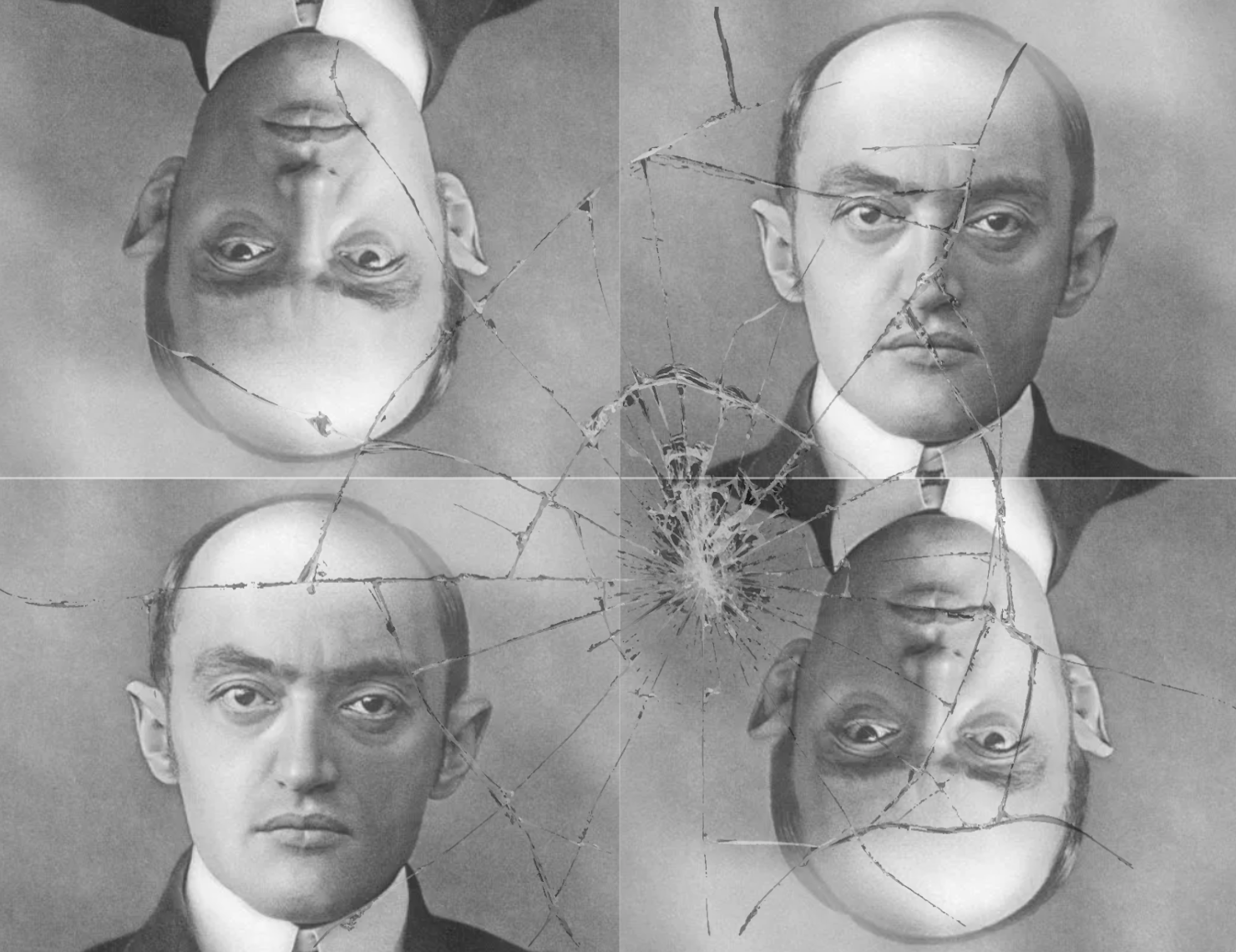
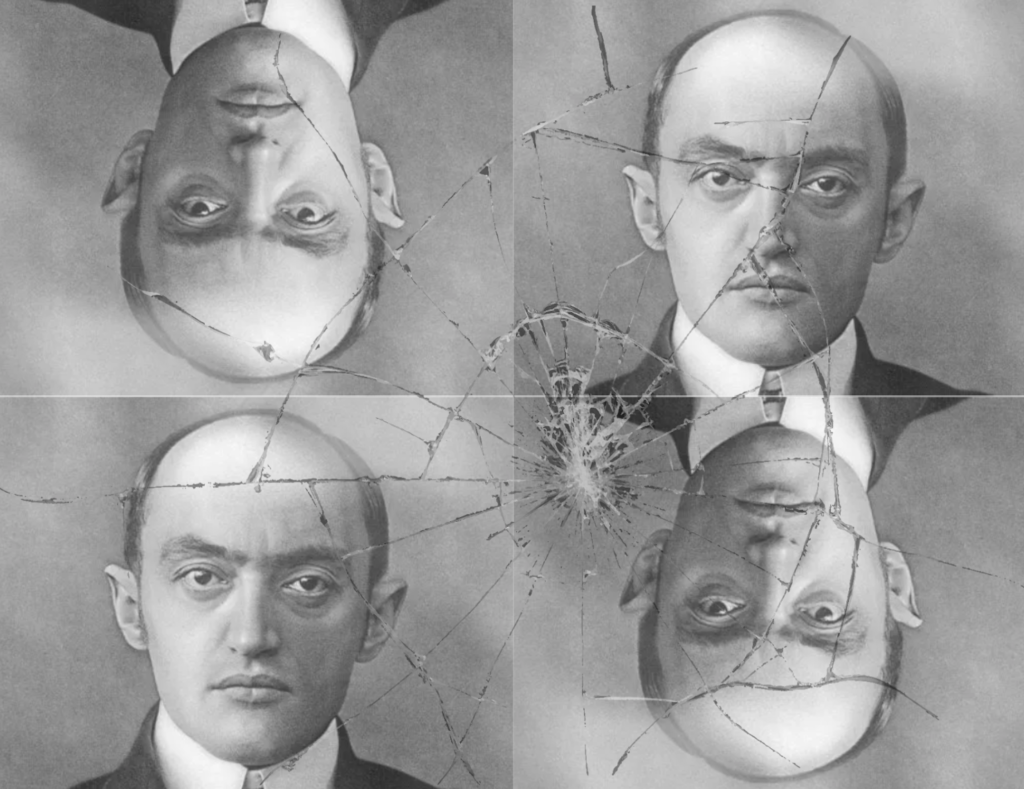
[14]: (Joseph Schumpeter portrait, 1914)
Two weeks ago, the new Chinese AI DeepSeek burst onto the tech scene like a wrecking ball, causing nearly $1 trillion to evaporate from the American tech stock market [1]. Not only did it manage to replicate ChatGPT’s performance at (allegedly) a fraction of the cost with fewer chips [2], but also made it open sourced, for all to pick apart and improve upon. The race to reach Artificial General Intelligence (AGI) might have only truly started now.
However, this mindset of accelerationism – move fast and break things – poses a serious question: are rushed innovations beneficial for society? In the wake of this technological disruption, one economic term has resurfaced in public discourse: creative destruction. Schumpeter’s concept, formulated in 1942, explains how innovation and technological change leads to the destruction of existing economic structures, and the creation of new ones. That process in turn spurs wealth creation [3].
Yet with climate change, population growth, and the world atomizing into economic blocks, should creative destruction be updated for the 2020s, if not scrapped altogether?
The printing press, caravels, light bulbs, steam engines, internet, streaming platforms: creative destruction needs no proof of work. For most of history, growth has been endemically low, only to shoot up in the 19th century, leading to a sharp, hockey stick-shaped [4] rise in economic growth. Global GDP grew 17,000% since the 18th century [5]. However this trend could change.
What is lesser known about Schumpeter’s theory is that it was intrinsically pessimistic. First, the cycle of innovation and destruction will bring more economic output and wealth to all individuals. But eventually, the innovators of the past will evolve into monopolies, gatekeep innovation, and voluntarily raise barriers to entry. They will achieve this either through low pricing strategy or merger and acquisition, preventing newcomers from competing [6]. This trend could not be more evident when looking at the tech sector, with insatiable, bloated corporations cementing their dominance [7][8]. All the GAFAMs have actively fought competition by preventing any new firm to emerge, whilst illegally maintaining monopoly power, according to the Federal trade commission (FTC) and the EU [9][10]. Late stage creative destruction would lead, according to Schumpeter, to the fall of capitalism.
Philippe Aghion, a leading economist on growth and innovation, recently released a book assessing Schumpeter’s creative destruction[11]. He argues that to avert capitalism’s fate, there should be both better taxation to incentivize companies into greener practices and antitrust laws to prevent the formation of conglomerates [6][11]. Mr Aghion believes that even with the current climate urgency, economies should stay away from degrowth and rather focus on green growth [12]. The process of decarbonizing our economies whilst at the same time maintaining growth is an appealing argument. Although historically, economic growth has been synonymous with higher resource extraction and pollution. Will government intervention be able to dissociate those two lines – emissions going down while GDP going up? Mr Aghion describes himself as a “fighting optimist” – opposing Schumpeter’s pessimism – a term quite fitting considering the major challenges ahead [11].
Schumpeter, like many of his contemporaries, never fathomed that growth would be so exponential after WW2, stretching thin earth’s resources before the turn of the century. It would take an additional three decades after 1942 for the first picture of our planet in its entirety to be taken by Apollo’s crew, showing how finite our home is. Thus it is hard to blame Schumpeter or his contemporaries for what now appears to be a lack of clairvoyance. His vision of our global economy choking on its own success is in dire need of an update, as it will most likely first decline through natural limitations. Add to that tariff wars on the rise and the growing split – only economical for now – between the Western and Eastern block [13]. The consequences become clear: there are plenty of additional components that could freeze and/or kill competition and innovation before monopolies would.
So what now? More government, over-regulation and taxation might not be the best course of action, but the contrary is also true: freeing markets from any guardrails is equally dangerous. We must strike a middle ground whereby taxation rewards the most sustainable practices, as well as provides a social safety net for the people most affected by the ensuing societal changes. All this of course without stifling innovation and wealth creation [6]. That would call for a funambulist-level of balance from policymakers. Schumpeter’s vision for capitalism may still hold relevance today, but the timeline for its potential undoing may be significantly shorter.
As we race toward an AGI-powered future, governments face the ultimate challenge: harnessing its power for sustainable growth, rather than letting it fuel unchecked consumerism.
~
Sources:
[1]: Dale, D. (2025, January 27). Deepseek’s debut sends U.S. tech stocks tumbling. CNN. https://edition.cnn.com/2025/01/27/tech/deepseek-stocks-ai-china/index.html
[2]: Roeloffs, M. (2025, January 27). What is Deepseek? New Chinese AI startup rivals OpenAI and claims it’s far cheaper. Forbes. https://www.forbes.com/sites/maryroeloffs/2025/01/27/what-is-deepseek-new-chinese-ai-startup-rivals-openai-and-claims-its-far-cheaper/
[3]: La ‘destrucción creativa’ de Schumpeter: ¿sigue vigente? (2020, June 19). BBC News Mundo. https://www.bbc.com/mundo/noticias-53102444
[4]: World Economic Forum. (2017, September). Over 2000 years of economic history in one chart. World Economic Forum. https://www.weforum.org/stories/2017/09/over-2000-years-of-economic-history-in-one-chart/
[5]: Roser, M. (2024). Global GDP over the long run. Our World in Data. https://ourworldindata.org/grapher/global-gdp-over-the-long-run
[6]: Aghion, P., Antonin, C., & Bunel, S. (2021, June 14). Rethinking capitalism: The power of creative destruction. INSEAD Knowledge. https://knowledge.insead.edu/economics-finance/rethinking-capitalism-power-creative-destruction
[7]: Mauldin, J. (2019, April 11). America has a monopoly problem. Forbes. https://www.forbes.com/sites/johnmauldin/2019/04/11/america-has-a-monopoly-problem/
[8]: Giles, C. (2020, September 15). Is creative destruction on the decline? Financial Times. https://www.ft.com/content/93f0fc4a-eab5-4364-835a-15530379436f
[9]: Federal Trade Commission. (2023, September 26). FTC sues Amazon for illegally maintaining monopoly power. Federal Trade Commission. https://www.ftc.gov/news-events/news/press-releases/2023/09/ftc-sues-amazon-illegally-maintaining-monopoly-power
[10]: European Commission. (2019, March 20). Antitrust: Commission fines Google €1.49 billion for abusive practices in online advertising. European External Action Service. https://www.eeas.europa.eu/node/60039_en
[11]: Aghion, P. (2022, June 27). Schumpeter Lecture Philippe Aghion 27.06.2022 [Video]. YouTube. https://www.youtube.com/watch?v=FuUa8uR7-HE
[12]: Kattel, R., & Mazzucato, M. (2018). Mission-oriented innovation policy and dynamic capabilities in the public sector. Industrial and Corporate Change, 27(5), 787–801. https://doi.org/10.1093/icc/dty032
[13]: Giles, C. (2020, October 10). The rise of ‘green’ protectionism. Financial Times. https://www.ft.com/content/32bedf88-cf5d-494e-ae45-4f94a3cec6f9
[14]: Joseph Schumpeter portrait, 1914
Leave a Reply