An impromptu nostalgia trip to Hong Kong that reactivates my taste buds

The scene:
There are a few pictures that I have kept from my time in HK. Gathering digital dust in my cloud storage, I seldom revisit them, as time makes this past life in China feel ever more distant.
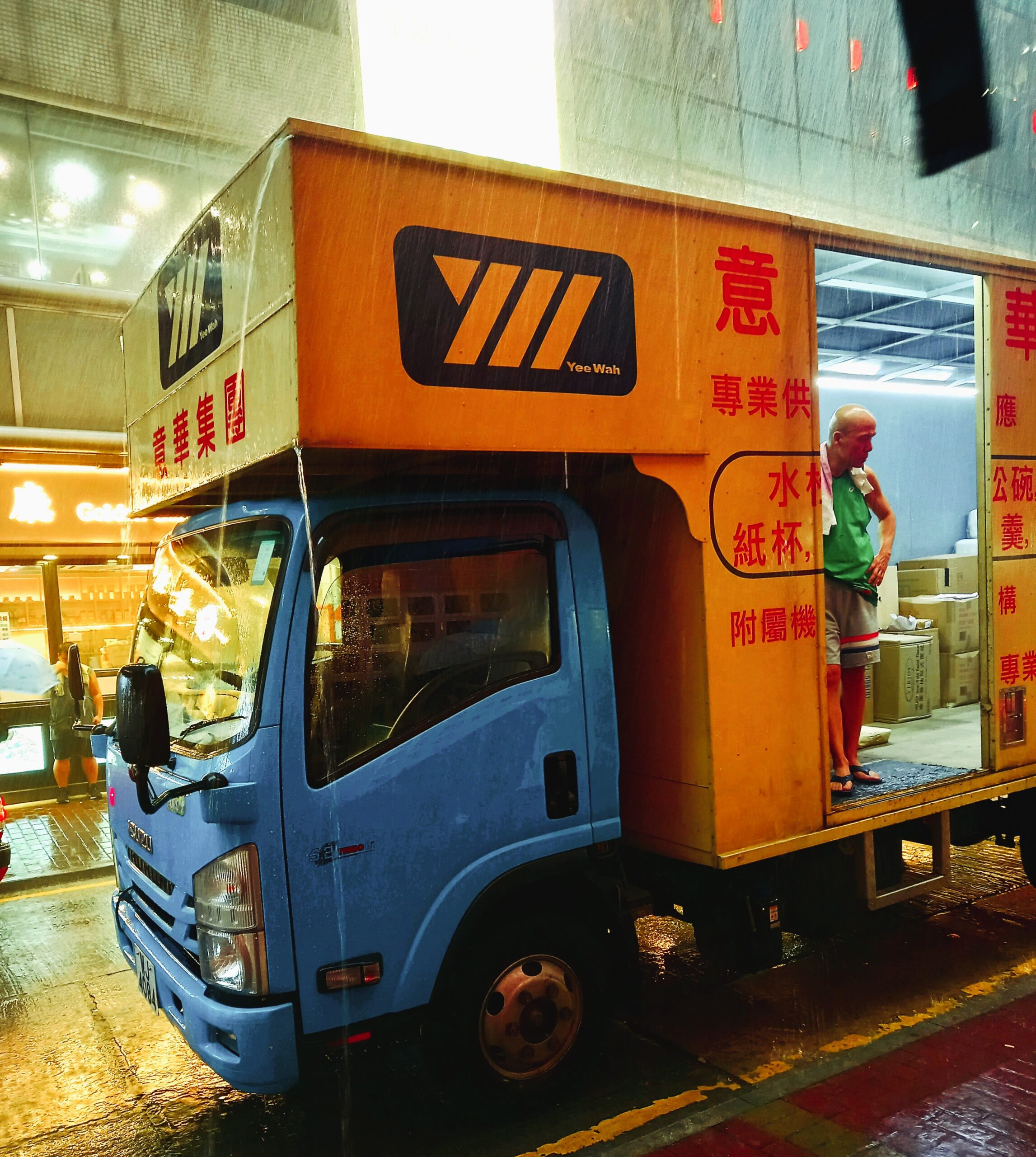
Yet yesterday, I stopped on one specific photograph I had taken during a black rain episode at night, in the heart of typhoon season on Jardine’s Bazaar street, in Causeway Bay neighborhood.

I cherish this picture because it captures the essence of this sleepless town in a single frame: A bald delivery man, wearing shorts, flip-flops and a tanktop to fight the suffocating humidity – and a scarfed kitchen towel to wipe off the stinging sweat – standing on the open cargo bed of his truck at 11pm, waiting calmly for the fifth biblical deluge of the week to subside before resuming his delivery to the myriad of businesses squeezed in a barely 200 meter long street.

(Jardine’s Bazaar length, google map 2025)
A glow was forming around the truck as the rain created an enveloping mist upon impact with the pavement, illuminated by the lights in the background. Most locals wisely take shelter rather than struggle against the rain with their flimsy 7/11 umbrellas.
Even though late at night, the HK style “Cha Chaan Teng” restaurant across the street behind our patient carrier remained open, serving exhausted night workers. Cost of living aside, there is something comforting about never feeling out of place. No matter your social status or working hours, the Neon city is always open, with dedicated restaurants of all shapes and forms serving tirelessly 24/7, supporting the never ending stream of labourers. The town never goes to sleep, and nurtures its people who care for it in return.
South East Asia, food capital of the world:
If there ever was such a thing as a culinary industrial complex, Hong Kong would be its foremost advocate. The feedback loop of a territory in constant need for fuel – both fossil and caloric – as it grows uninterrupted even by night and storm, is a hallmark of most South-east Asia metropolises. The by-product of this high productivity is the creation of a food scene so vibrant, a western mind simply cannot fathom. This symbiotic system matured in Hong Kong long before other Chinese cities thanks to its unique status, becoming in the process one of Asia’s leading food capitals. Some would call it working class alienation pointing to the grueling working conditions and lackluster labour rights – especially so for the Filipino, Nepalese and Indonesian community – and they would have a point. Hong Kong lies indeed somewhere between symbiosis and dystopia.
Taken by surprise in this unannounced storm, I hid like most, waiting for the typhoon to be over to go back to my nightly culinary endeavours after my shift. Causeway Bay was my home for three years, a place I came to know intimately.
The Street:
Jardine’s Bazaar street is one of the most iconic on Hong Kong Island. Its very name epitomizes the territory’s complex history. William Jardine was the head of the Jardine Matheson empire – one of the most influential British “hong” (trading firms) in Asia during the 19th century. The company grew to become the largest opium trader in China, seeking to expand its business across the continent before imperial authorities cracked down on the trade. He is widely regarded as the main lobbying figure behind Britain’s first Opium war, to safeguard the crown’s business interest in Asia. The “gunboat diplomacy” sparked by his infamous letter to Parliament marked a paradigm shift event in Western-Chinese relations, and the catalyst to the fall of China as a major power – from the first opium war in 1839 to the end of Japanese occupation post WW2. This so-called “century of humiliation” has been informing Beijing’s political doctrine ever since, with consequences the world is slowly grappling with.
Jardine’s historical significance is in stark contrast with the street’s smallness and modest purpose. This narrow strip of asphalt serves as both a minibus terminal and food haven for blue-collar workers. You can embark or disembark, and treat yourself accordingly – a steamed bun from Tong Kee Bao Dim on the go for the early commuters, or a soup on a tiny plastic stool for optimum noodle-gulping capabilities for the wonton aficionados. Then you can once again embark to the destination of your choosing, or to the workplace you ought to be to afford the city’s eye-watering rents.
In a way, I was one of those workers too – albeit caucasian, blond, and not necessarily living pay-check to pay-check. With the storm deciding to unleash its rage on another neighborhood, I finally managed to go to my beloved outlet, up the road. King’s Cafe was only 50 meters from the delivery truck. I could have walked there blindfolded, guided only by the scent of its steaming day-old broth bubbling from afar. The truck unloading resumed as I headed towards the cafe.
King’s cafe:

(King’s cafe store sign, Rainbow 1231, Open Rice 2015)
When first arriving in HK, I passed through this street a few times, and that one restaurant caught my attention instantly. I have a flair for rusticity, and this outlet screamed at all my senses: simplicity – and for me, above all, practicality. For the following 3 years, I would regularly go back to this place, as much for a necessary calorie intake after a 25k steps shift, as for comfort food when western cuisines would bore me.
There were a few items on the menu, all hallmarks of HK culinary cultures: Fish ball soups, HK toast w/ scrambled eggs, beef intestine noodle soup, wontons, pig trotters over lo Mein… But from the very first moment I set my eyes on the outdoor menu display, I knew what to choose, a compromise between affordability and exoticness: A classic HK brisket & wonton soup – affordable yet not overly experimental (pig trotters or chicken feet will repel any newly arrived immigrants, sorry I meant to say expats).

(View from inside the cafe / broth steaming / briskets dangling, Victoriano Paredes, google maps 2018)
Finishing work at the later hours of the night might have one advantage: the broth simmering all day has peaked in flavour. Sure, water with MSG was liberally added to retain that meaty intensity – shortcuts must be taken to keep service going – but the pieces of meat cooking in the stock are perpetually rotated, even more so during rush hours. In downtimes, they are then removed from the pot and hooked right above to prevent overcooking whilst simultaneously dripping its juices back into the broth – an unattractive but astute set up. The resulting dish, though, is nothing short of spectacular.

(Beef brisket and wonton soup, King’s cafe, Tripadvisor, 2022)
Out of curiosity and boredom in the early hours of a lazy Saturday morning, I wanted to know how many restaurants are crammed into this minuscule 200 meter long street. To my surprise, it was impossible to find a full list. Therefore, after triangulating data from Google Maps, Google Street View, and OpenRice, I managed to sketch a list of all the street-level restaurants (the wide variety of offerings is dizzying):
| Name | Type | Link | |
| Andy’s Kitchen | Sichuan | Link | 1 |
| Chef’s Catering | HK style | Link | 2 |
| Chun Fun How | Taiwanese bubble tea | Link | 3 |
| Din Tai Fung | Taiwanese / Dim sum | Link | 4 |
| God Food | HK style / Snacks | Link | 5 |
| Golden Zone | HK style / Breakfast | Link | 6 |
| Glee Café | HK style breakfast | Link | 7 |
| Harvest House | Japanese / Izakaya | Link | 8 |
| Hidden | Japanese / Izakaya | Link | 9 |
| Hot-Star Fried Chicken | Taiwanese / Snacks | Link | 10 |
| Hungry Korean | Korean / Ramen | Link | 11 |
| James Bonbon Bakery | Bakery | Link | 12 |
| Jacomax | Italian / Pizza | Link | 13 |
| Jiangsu & Zhejiang | Jiang-Zhe / Shanghai | Link | 14 |
| Ki’s Roasted Goose | Guangdong / HK BBQ | Link | 15 |
| King’s Café | HK style / Rice noodles | Link | 16 |
| King’s Dim Sum | Dim sum / Guangdong | Link | 17 |
| Luen Wai Restaurant | HK style | Link | 18 |
| Mammy Pancake | HK style / Pancakes | Link | 19 |
| Man Fai | Chiu Chow / Noodles | Link | 20 |
| Meat Cuisine Hiro | Japanese BBQ | Link | 21 |
| Old Beijing | Chinese hot pot | Link | 22 |
| Pie & Tart | HK style bakery | Link | 23 |
| Potato Corner | Western / Snacks | Link | 24 |
| Running Chicken | HK style hot pot | Link | 25 |
| Seoul Noodles | Korean noodles | Link | 26 |
| Shanghai HK Noodle Shop | HK/Shanghai noodles | Link | 27 |
| Shí Wèi Authentic Shanxi Noodle House (拾味正宗刀削麵館) | Shanxi / Ramen | Link | 28 |
| Taipan | Taiwanese / Bakery | Link | 29 |
| Tea Only | HK style / Taiwanese drinks | Link | 30 |
| The Vigor | Chinese fried noodles | Link | 31 |
| Tiger Sugar | Taiwanese bubble tea | Link | 32 |
| Tong Kee Bao Dim | Chinese buns / Dim sum | Link | 33 |
| Warung Malang Club | Indonesian / Halal | Link | 34 |
| Wing Kee Noodle | HK style noodles | Link | 35 |
| Yan Wo Dou Bun Chong | HK style breakfast | Link | 36 |
| 連和燒味餐廳 | Guangdong / Chinese BBQ | Link | 37 |
| 老厝邊 | Taiwanese | Link | 38 |
| 肥仔記麵家 (Causeway Bay) | Wonton noodles | Link | 39 |
| 肥仔記麵家 (Noodle soups) | HK style noodle soups | Link | 40 |
As pointless of an exercise as cataloging these outlets may be, virtually walking through Jardine’s bazaar pavement on Google Street View spiked my nostalgia level to unbearable heights.
Years after my life in the “fragrant harbor”, as Hong Kong is called in Cantonese, I felt compelled to recreate this experience which used to be my daily routine. My aim: to make this emblematic HK brisket dish, and travel momentarily back into this street, wrapped in the aroma of its simmering broth, in the humidity, the rain, after a night shift – like in that picture.
The recipe:
Truthfully, when it comes to Cantonese cooking, I rely entirely on the great Chef Lau – known as Made with Lau on YouTube. The broth is simple, but much like in King’s Café, ingredients reach their optimum flavors with time and patience.
In a pot, place your brisket (or carbonade if you live in Belgium) in cold water, and bring it up to a boil. Once boiling for a minute, remove from heat and rinse the meat in cold water. Parboiling meat is an essential method to remove the excess myoglobin and impurities. Chinese cooks will go through this process for nearly all types of broth. In an empty pot, drop the ginger, garlic, and scallion pieces in with a bit of oil to toast until fragrant, then add water and your brisket, 3 teaspoons of Chinese five spice, 1 tablespoon of chicken powder, and a bit of Shaoxing wine to remove the unpleasant gaminess. Bring to a boil, then reduce to a gentle simmer for 2 to 3 hours, skimming off the foam periodically.

(Simmering broth)
While the broth is building up its flavors, there’s time aplenty to make the wontons. First of all, in a pan, heat some oil (or chili oil), add the classic Chinese aromatics (garlic, scallion, ginger), toast for 2 minutes until fragrant, then add your napa cabbage, cut into small pieces. Stir over high heat for a few minutes, then put the lid on and let it steam until soft, about 20 minutes. Once soft and reduced, remove the lid, add soy sauce, and cook over high heat until the cabbage is caramelized. Remove from heat and let it cool. In the meantime, wash the minced meat under cold water, pat it dry, then in a bowl add chicken powder, corn starch, soy sauce, salt, and the cooled caramelized cabbage to the minced meat. Mix well until the filling is homogeneous and sticky, but not too moist. A classic Chinese technique to achieve this consistency is to pick up the filling and slap it into the bowl, repeating the process until the proteins have broken down and the mixture is cohesive. If you feel the mixture is not cold enough, leave it in the fridge to chill for a dozen minutes, then it’s time to assemble.
There are countless dumpling shapes, even in the wonton category, with many folding styles. But the most traditional (and easy) to master is the “goldfish shape,” due to its resemblance to a fish with its wrapper tail. To do so, take your square-shaped wrapper, place it into your hand, and slightly dampen all the sides with cold water. Put a teaspoon’s worth of filling in the middle, then press it down whilst folding the outer parts of the wrapper over it. Once all sides are sealed, squeeze them firmly with your index finger, making sure to remove air pockets between the wrapper and the mixture. Place on a floured tray and repeat with the rest. Once done, move to the fridge if consumed the same day. Otherwise, put them in the freezer for later use (I am guilty of making wontons on an industrial scale to store in my freezer for just about anything: soup, salad, as an appetizer, or even to add to a velouté…).


(Wonton assembly)
Once the broth has reached its clear, dark brown color, add large dices of daikon and Chinese kale into the pot and cook for an additional 20 minutes until the right consistency is reached (daikon should be snappy on the outside yet melty on the inside). Once the soup is done, remove the brisket and cut into thin strips against the grain.
Add your fresh wontons to the broth and let them cook for a couple of minutes until they float and the wrappers are glossy and translucent. Serve in a bowl with a handful of chopped scallions and, if desired, a teaspoon of chili crisp. Savour hot and steamy.

(End result: Satisfactory)
Summary (courtesy of Chatgpt)
Main Ingredients
- 8 g fresh ginger (≈ 1 oz), sliced
- 3 stalks green onion (green parts only)
- 570 g daikon radish (≈ 20 oz), peeled and cut into chunks
- 710 g beef brisket (≈ 25 oz), cut into large chunks
- 6 Chinese kale stems
- 2.4 L water (≈ 10 cups)
Wrapper filling
- 50 wonton wrappers
- 500g minced meat (mixed pork and beef is a great flavor package)
- 2 scallions
- 1 clove of garlic
- 2 slices of ginger, diced
- 1 tsp chili oil
- 1 large napa cabbage
- 2 tbsp soy sauce
- 2 tsp salt
- 2 tsp chicken powder
- 1 tbsp corn starch
Seasoning
- 15 g chicken powder (≈ 1 tbsp)
- 5 g salt (≈ 1 tsp, adjust to taste)*
- 1 g ground white pepper (≈ 0.25 tsp)
- 30 ml cooking wine (≈ 2 tbsp)
- 3 tsp Chinese 5 spice powder
Instructions
- Prepare the brisket
- Cut beef brisket into large pieces.
- Blanch in boiling water for 5 minutes to remove impurities.
- Rinse under cold water and set aside.
- Simmer the soup
- In a large pot, add brisket, water (2.4 L), ginger, and green onion. Add cooking wine.
- Bring to a boil, then reduce heat to low and simmer for 2–3 hours, skimming off foam for a clear broth.
- Wonton filling and assembly
- Prepare cabbage: Heat oil (or chili oil), sauté garlic, scallion, ginger (2 min, fragrant). Add chopped napa cabbage, stir on high, cover and steam (≈20 min). Uncover, add soy sauce, cook until caramelized. Cool completely.
- Make filling: Rinse and pat dry minced meat, Mix with chicken powder, cornstarch, soy sauce, salt, and cooled cabbage. Stir until sticky and cohesive (slap mixture in bowl to bind proteins). Chill briefly if mixture feels warm.
- Shape wontons: Place wrapper in hand, dampen edges with water. Add 1 tsp filling in centre, fold edges over and press to seal. Remove air pockets; pinch top to create “goldfish” tail shape.
- Store: Place on floured tray. Refrigerate for same-day use, or freeze for later.
- Add vegetables
- After 1.5 hours of simmering, add daikon radish chunks.
- Continue simmering until the brisket is tender and the daikon is soft (about 1–1.5 more hours).
- Season
- Stir in chicken powder, salt, and white pepper. Adjust to taste.
- Serve
- Ladle brisket and broth into bowls.
- Serve hot with the optional chili sauce, soy sauce.
Made with Lau’s website HERE
Leave a Reply